
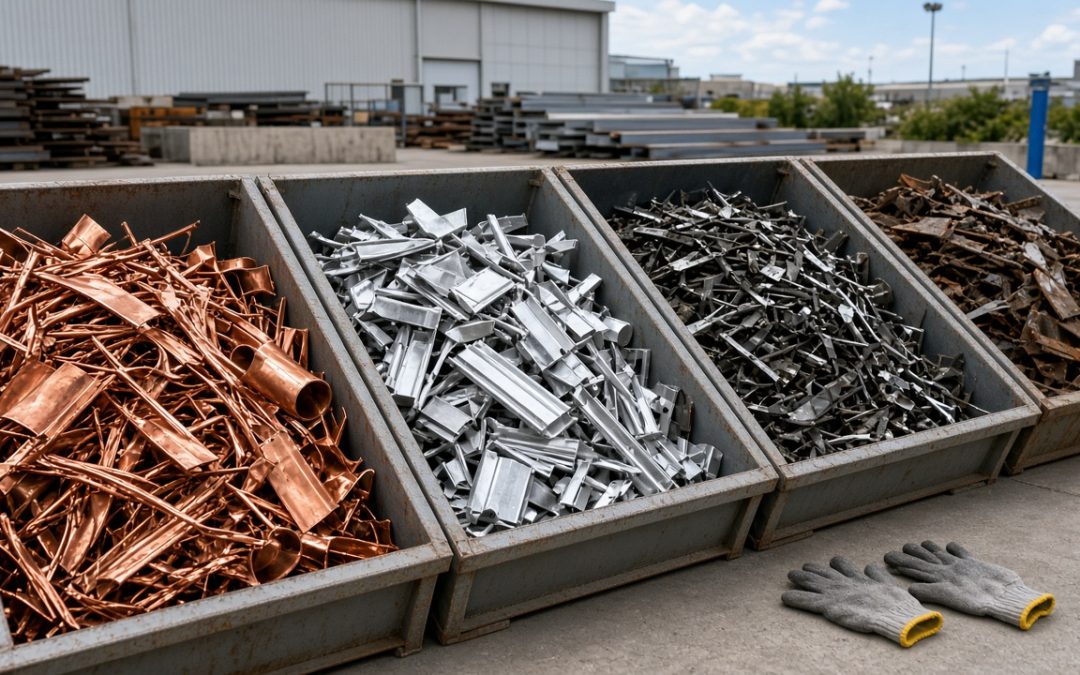
Scrap metal pays best when it is clean, correctly separated, and safe to handle. A bucket of mixed copper and steel might look like profit until the yard discounts it for contamination, moisture, or hazards you did not see. Whether you are clearing a garage in the Twin Cities suburbs or running trim waste off a commercial jobsite, sorting protects your payout, your crew, and the equipment downstream. Safety and grade discipline go together—messy loads cost money twice.
Know Your Grades Before You Load the Truck
Yards price by grade: bare bright copper, #1 copper, insulated wire classes, clean aluminum, mixed low-grade, stainless variants, and ferrous shred versus prepared steel. Each grade has rules about attachments, coatings, and alloy mix. A stainless sink with steel clips lands differently than clean 304 sheet. Aluminum lawn chairs with steel bolts need separation—or you accept a lower bucket.
Label bins at the jobsite or in your shop the way the yard will think: copper, brass, aluminum, stainless, iron, and wire by insulation level if you strip in volume. Training one helper on grades often pays for itself on the first load.
Contaminants That Trigger Discounts or Rejection
Oil, grease, and coolant residue on engine blocks and machinery flag environmental handling. Drain fluids properly and follow local disposal rules before scrap leaves your property. Yards reject or downgrade loads with visible liquids because processing and compliance costs spike.
Non-metallic attachments hurt too: rubber, plastic, wood, fabric, and concrete stuck to rebar or plate drop tonnage value fast. Spend a few minutes with a magnet, cutter, and wire brush on high-value pieces. The labor is tiny compared with moving twenty percent of a load into the wrong pile.
Paint and heavy galvanizing sometimes matter for certain grades; ask your buyer what their current spec allows. Mystery alloys—pot metal, zinc die cast mixed with aluminum—are classic homeowner mistakes that downgrade an entire bin.
Wire and Cable: Insulation, Burn Risks, and Theft Laws
Insulated copper pays by percentage recovery; stripping only makes sense at volume and with safe tools. Never burn insulation off wire to chase bare bright prices—burning releases toxic fumes, violates regulations, and can get loads rejected outright. Mechanical strippers and proper knives beat backyard fires every time.
Keep purchase records for wire if you are hauling new-cut material. Minnesota dealers operate under laws aimed at metal theft; legitimate sellers with IDs, addresses, and proof of ownership move faster through the gate.
Jobsite Safety While Sorting
Sharp sheet metal, nail-rich demolition, and spring tension in old equipment cause most scrap injuries. Cut-resistant gloves, eye protection, steel-toe boots, and tetanus-current first aid kits belong on every active sort area. Stack heavy pieces low; strap loads so they cannot shift in transit.
Separate flammables and pressurized containers from metal piles. Propane tanks, aerosols, and unknown sealed drums are not scrap—they are emergencies waiting for a baler or torch. Identify them before the magnet stick touches anything.
Use proper lifting technique or mechanical help for beams and castings. A payout bonus vanishes quickly if someone misses work with a back injury.
Home Garage and DIY Sorting Tips
Set a dry zone for copper and brass so road salt and garage floor moisture do not stain metal. Keep a dedicated barrel for steel and cast iron away from aluminum to prevent galvanic staining and sort confusion. When in doubt, keep pieces separate rather than guessing—yards would rather answer a quick question than regrade a whole load.
Remove batteries from appliances before scrapping. Lead-acid and lithium packs require separate recycling streams; mixed loads can be hazardous and expensive to reject.
Working With Your Scrap Yard for Better Returns
Build a relationship with a reputable buyer who publishes grade guidelines. Bring sample pieces when you start a new project type—demolition trim, medical equipment, farm implement—and ask where they want it. Consistent sellers often get clearer feedback and faster turnaround.
Weigh on certified scales, understand tare for containers, and keep tickets for taxes if scrap income applies to your situation. Documentation also helps internal jobsite accounting when you pass savings to clients.
FAQ
Why was my mixed load priced lower than I expected?
Mixed grades default to the lowest valuable component or a general mixed rate. A little separation time upstream usually beats arguing at the scale after the fact.
Can I throw aluminum gutters with steel hangers in one bin?
Remove steel screws and hangers when practical. Small ferrous contamination in aluminum loads is one of the most common homeowner downgrades.
Is it worth stripping household extension cords?
Usually only at volume; insulation weight is high relative to copper in thin cords. Bundle like insulation types and ask your yard’s current spread before you invest hours.
What should never go into a scrap metal load?
Fuel, oil, asbestos, refrigerants, unexploded pressurized tanks, radioactive sources, and biohazard materials. These belong in regulated disposal, not metal processing.
How do I stay safe around unknown metal objects?
Treat unidentified cylinders, military surplus, and chemical plant hardware as hazardous until proven otherwise. When labels are missing, call for professional assessment instead of cutting.